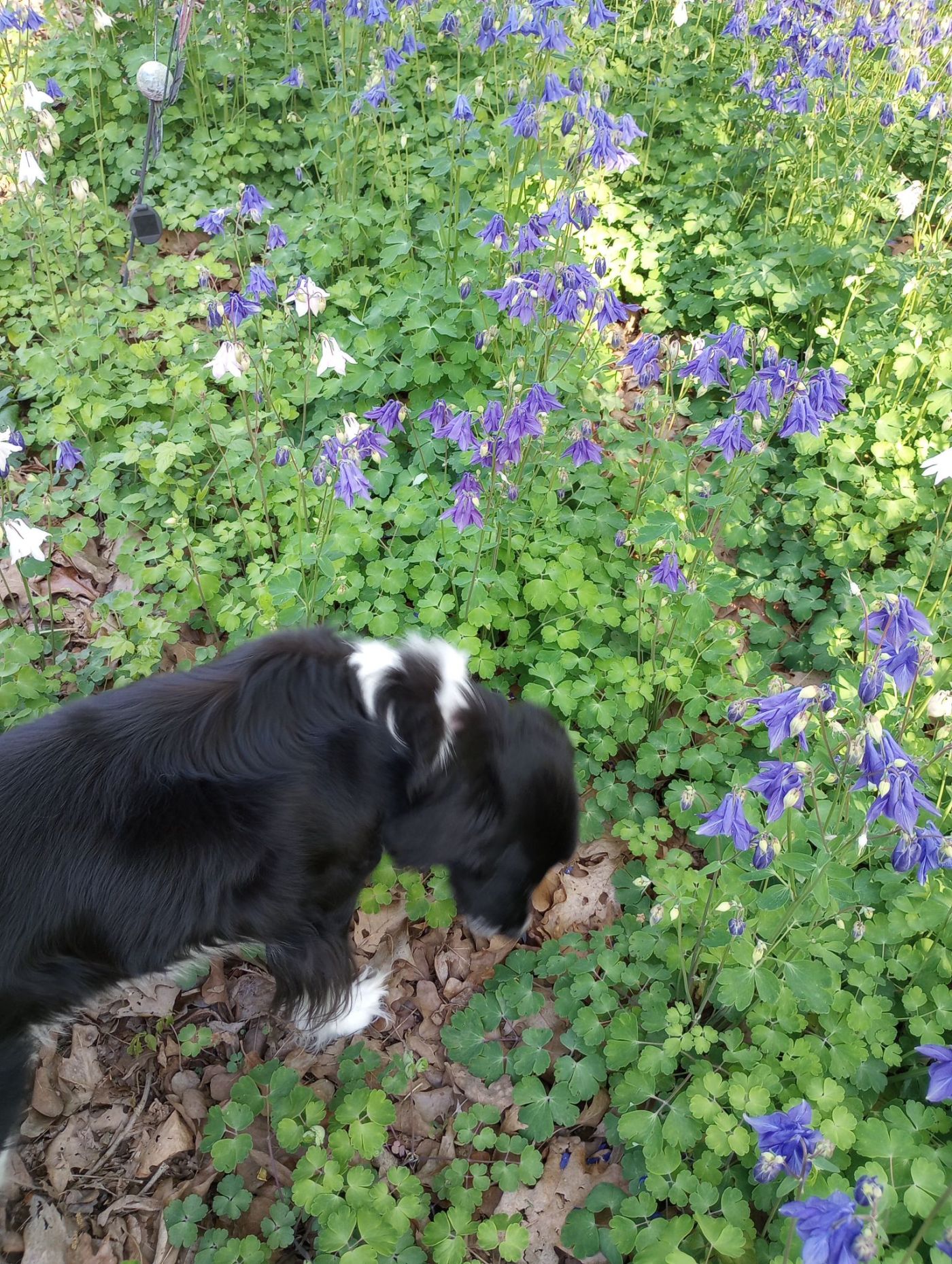
Sweetie the dog keeps me company as I clean up my garden beds from two years of neglect here at Magnolia’s End.
Magnolia’s End is a pretend urban farm on half an acre in the foothills of southern Appalachia. It is pretend because I am a sad excuse for a farmer, but I do consistently try to be one. It is one of the ways I try to make the world kinder and more sustainable.
I am an utter failure at growing vegetables. Except cherry tomatoes. I can grow some cherry tomatoes. And dirt. I can grow dirt. My compost is truly black gold. That and the chickens are about all the farming I can confidently do.
But that doesn’t keep me from trying!
Magnolia’s End is about half law/half garden beds, which gives me a lot of gardening space. Most of it is in the shade and I try hard to make it beautiful. It is a small way for me to spread some goodness into the world. By making my garden pretty, I make myself happy. I get to look at something pretty and get compliments on how nice it looks. Others are made happy by looking at a beautiful garden.
Due to a deep depression that I suffered through last year, I did nothing with the garden last season. It is very obvious that the garden beds have been neglected. Many plants are overgrown. Leaves litter the ground in crunchy moundfuls. The wood chip mulch has decomposed and weeds run rampant.
If I looked at the whole garden and everything I had to do, I would be overwhelmed with panic. “I can’t do it,” I would say, “this is too much.” Then I would do nothing, and my intention of a beautiful garden would never come to fruition.
Defeating the Overwhelm
A coping skill I learned a long ago was to to break big projects into smaller chunks. Then break those smaller chunks into even smaller chunks. Break those chunks into actionable tasks.
Make a plan
The first step is to make plan. So I looked at all of my overgrown garden bed and told the panic to take a hike. Then, I decided I would break the garden into specific beds. That gave me a total of 7 beds; the mailbox garden, the rose garden, the driveway garden, the right front garden, the left front garden, the side garden, and the shade garden. The smallest is the mailbox garden, the largest the shade garden.
It’s important to feel a sense of success when starting a big and difficult project, so I started with the smallest garden—the mailbox.
Start With The Obvious
It may be tempting to start with the easiest thing or the most exciting thing, but start with the most obvious thing. What will give you the most reward for your time and energy? Or, what do you have to do first in order for the project to move forward.
The obvious thing to do with this bed was removing the leaves that had gathered up over the past two years.
What’s The Next Obvious Step
Once, you’ve started and done that first task, ask yourself, what is the next obvious step with this project? You may have two or more equal options, and that’s ok. The important thing is to choose one.
Now that the leaves were gone, I could see all of the weeds and the heavily multiplied irises. I could either pull the weeds or dig up the irises, it didn’t really matter which order I did it in. I decided to dig up the irises first, mainly because I didn’t want to weed in between plants that I was going to dig up anyway.
I ended up digging up about 50 irises, some hyacinths, and a group of daylilies. In place of the daylilies, I planted a lavender bush and a rose bush in the back where I’d cleared out some irises. Then, to top it off, I mulched the entire area with woodchips.
Reward Yourself
After you’ve done the small chunk of the project that you are working on, reward yourself with something. In between weeding and digging, I took small breaks and played on my phone as a reward. I also cuddled with my dog, a great reward. The big reward was sitting on my front steps enjoying a cup of tea and overlooking my beautiful renewed garden.
What projects are you working on right now? How are you breaking it up into small, manageable chunks?
 Katherine LE White
Leave a comment